When choosing skis, you’ll often see terms like rocker, camber, and flex. These features influence how a ski turns, grips, and performs in different snow conditions.
Rocker, camber, flat – essential terms in ski construction
Understanding the various rocker technologies is essential to understanding the terminology concerning ski construction. The elements described influence each other in their effect and should be seen as a whole. Many terms ultimately mean the same thing. I will, therefore, limit myself to the most frequently used ones, keeping it short and straightforward.
Rocker skis mean easier turning & better float
A rocker means the ski tip and/or tail starts rising earlier from the snow. Think of it like the curved front of a boat.

Rockers can be found in many/most ski models today: From freeride skis to race carvers.Benefits: Easier to turn More forgiving if your technique isn’t perfect Better float in soft snow and powder Best for: All-mountain skiing, freeriding, and mixed conditions.
Benefits:
- Easier to turn
- More forgiving if your technique isn’t perfect
- Better float in soft snow and powder
Best for: All-mountain skiing, freeriding, and mixed conditions.
Camber: Better grip & stability
Camber is the slight arch under the middle of the ski. When you stand on the ski, it flattens and presses the edges into the snow.
Benefits:
- Strong edge grip
- More stability at speed
- Better carving performance on groomed pistes
Best for: Resort skiing and hard-packed snow.

Not only freeride skis are equipped with a rocker, but also carving skis, like the K2 Disruption here, are increasingly coming with a tip rocker for more turning pleasure.
Flex: How Stiff or Soft a Ski Feels
Flex describes how easily a ski bends. [bergzeit.fi]
Soft flex
- Easier to control
- More forgiving
- Great for beginners and intermediate skiers
Stiff flex
- More precise
- Better stability at high speed
- Preferred by advanced skiers
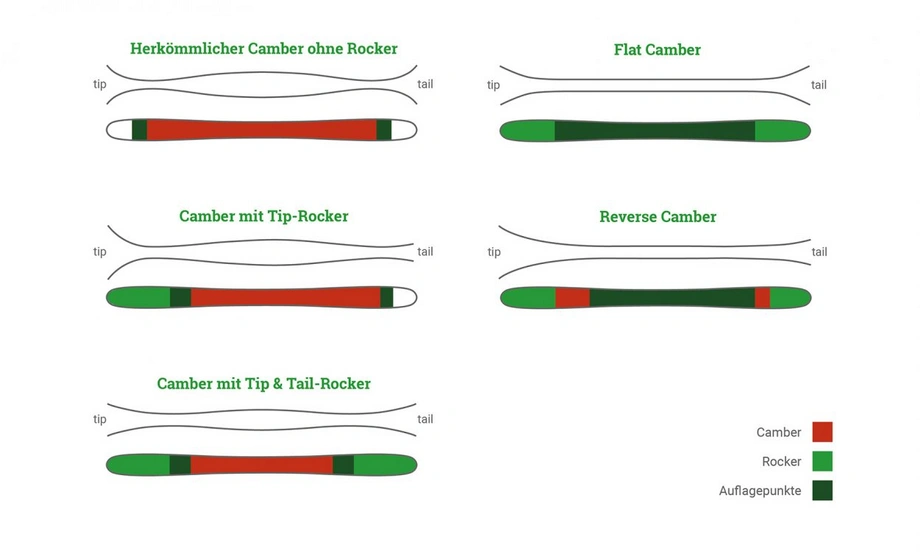
An overview of different ski constructions
Which Ski Profile Is Right for You?
Traditional Camber
✅ Maximum grip and carving performance
✅ Stable at speed
❌ Less float in soft snow
Ideal for: Piste-focused skiers.
Tip-Rocker + Camber
✅ Easy turns
✅ Good grip on piste
✅ Better performance in mixed conditions
Ideal for: Most skiers looking for one versatile ski.
Tip- and Tail-Rocker
✅ Playful and maneuverable
✅ Forgiving in variable terrain
❌ Slightly less edge grip on ice
Ideal for: All-mountain and freeride skiers.
Full-Rocker
✅ Excellent float in deep powder
✅ Easy to pivot and smear turns
❌ Less effective on hard-packed snow
Ideal for: Powder days and backcountry skiing
Quick Rule of Thumb
- Mostly groomed pistes? → Camber.
- A mix of piste and off-piste? → Tip rocker + camber.
- Lots of freeriding and powder? → Tip & tail rocker or full rocker.
- Want one ski that does most things well? → Tip rocker with camber underfoot.
In short: Camber gives grip and precision, rocker gives forgiveness and float, and flex determines how demanding or easy a ski feels. Most modern all-mountain skis combine rocker and camber to offer the best balance of both worlds.
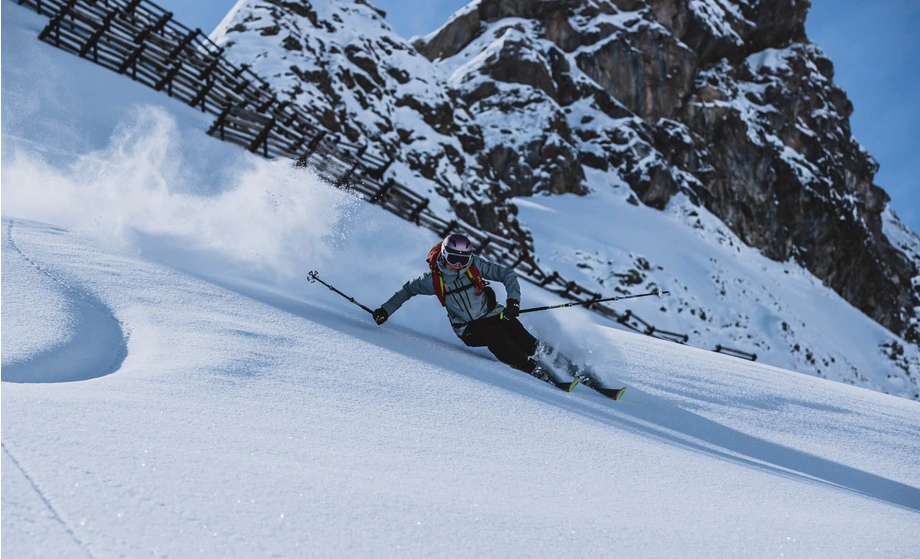
The length of the ski depends mainly on the area of use and the size of the skier – freeride skis, for example, tend to be longer.